Unlock Growth: Business Process Transformation for Indiana
TL;DR
- Business process transformation fixes recurring bottlenecks like aging servers, bad Wi-Fi, clunky software, and manual handoffs.
- For Central Indiana businesses, the real win is less downtime, fewer surprise repairs, and more productive hours.
- Downtime can cost up to $9,000 per minute in a crisis, so prevention matters more than patchwork.
- Strong projects start by mapping the process, not buying tools first.
- Good ROI comes from labor savings, fewer errors, faster throughput, and better resilience, not just cheaper headcount.
- The biggest failure point isn't usually the tech. It's poor change management and weak user adoption.
- The right stack often includes cloud systems, UniFi networking, Zero Trust security, Bitdefender GravityZone, SOC-as-a-Service, and immutable off-site backups.
- Measure success with agility, recovery time, and process health, not just cost reduction.
Your office is open, your team is clocked in, and nothing is technically “down.” But the file server freezes every afternoon. The Wi-Fi drops in the back half of the building. The ERP screen takes forever to load. Somebody prints a form because “that's just faster,” then somebody else rekeys the same data later. By lunch, half the staff has spent part of the day fighting technology instead of doing their actual job.
That's the version of downtime most Johnson County business owners live with. Not a dramatic outage. A slow bleed.
Around Greenwood business parks and up the I-65 corridor, I see the same pattern. Companies buy another access point, replace one PC, add one software subscription, and hope the pain eases up. It rarely does. The bottleneck just moves. What looked like an IT problem turns out to be a process problem.
Business process transformation is the disciplined version of fixing that mess. It means looking at how work moves through your business, where it stalls, who has to touch it, which systems create drag, and what changes will stop the same failure from showing up again next week.
This isn't corporate-theater language for a big-company reorg. For a local manufacturer, medical practice, law office, warehouse, or contractor, it's the difference between reacting all month and running the place on purpose.
Your Roadmap From Frustration to Transformation
A common Southside story starts with an aging server in a Greenwood business park. It worked fine when the company had fewer staff, fewer files, and one line-of-business app. Then they added cloud apps, more shared documents, maybe a camera system, maybe VoIP, maybe remote access for sales staff. Now every afternoon, when everyone's in the system at once, performance falls apart.
The first instinct is usually tactical. Reboot it. Add memory. Replace a switch. Call the copier vendor because scanned files are delayed. None of those moves are crazy. They're just incomplete.
The real bottleneck usually isn't where people think
When a warehouse supervisor along the I-65 corridor says, “Our shipping station keeps going down,” the issue might be Wi-Fi coverage in a steel-heavy area. It might be a flaky endpoint. It might be a database app talking to old storage hardware. It might be a process where the same shipment data gets entered into two systems and creates delays when they don't match.
That's why business process transformation starts with diagnosis, not shopping.
Practical rule: Don't automate confusion. Fix the handoff, the dependency, or the choke point first.
In our 17 years of local service, the most expensive problems haven't usually been exotic. They've been ordinary issues left in place too long. A failing RAID array that nobody replaced because it still “mostly worked.” Spotty Wi-Fi in an old brick building that killed barcode scans. Backup jobs that were technically running but weren't restorable. Those are business continuity problems wearing IT clothes.
What permanent improvement looks like
A managed approach fixes the stack and the workflow together:
- Infrastructure first: Replace unstable hardware, clean up switching, and redesign wireless with latency-optimized mesh nodes where dead zones keep breaking workflow.
- Security built in: Put Zero Trust architecture around users, devices, and data instead of trusting everything inside the office by default.
- Recovery planned: Use immutable off-site backups and tested restore procedures so one ransomware event or hardware failure doesn't stop the business cold.
- Support tied to operations: Align IT support with how the business runs, not just with a list of devices.
For a Hamilton County medical office, that means balancing convenience with HIPAA requirements. For a defense-adjacent shop, it means documenting controls in a way that supports CMMC expectations. For a general business, it means building around NIST CSF principles so security and continuity don't depend on luck.
If your systems feel patched together, they probably are. A useful starting point is a practical Indiana business IT roadmap for 2026 that ties infrastructure, security, and workflow decisions back to actual business risk.
Why Transformation Is an Investment Not an Expense
Most owners don't need another lecture about “innovation.” They need to know whether the spend reduces headaches, protects revenue, and gives them a budget they can trust.
That's the right question.
Patchwork costs more than it looks
The obvious cost is the outage. The hidden cost is all the near-outages. Staff waiting on slow systems. Rework caused by bad handoffs. A bookkeeper babysitting imports. A service manager calling around because software didn't sync again.
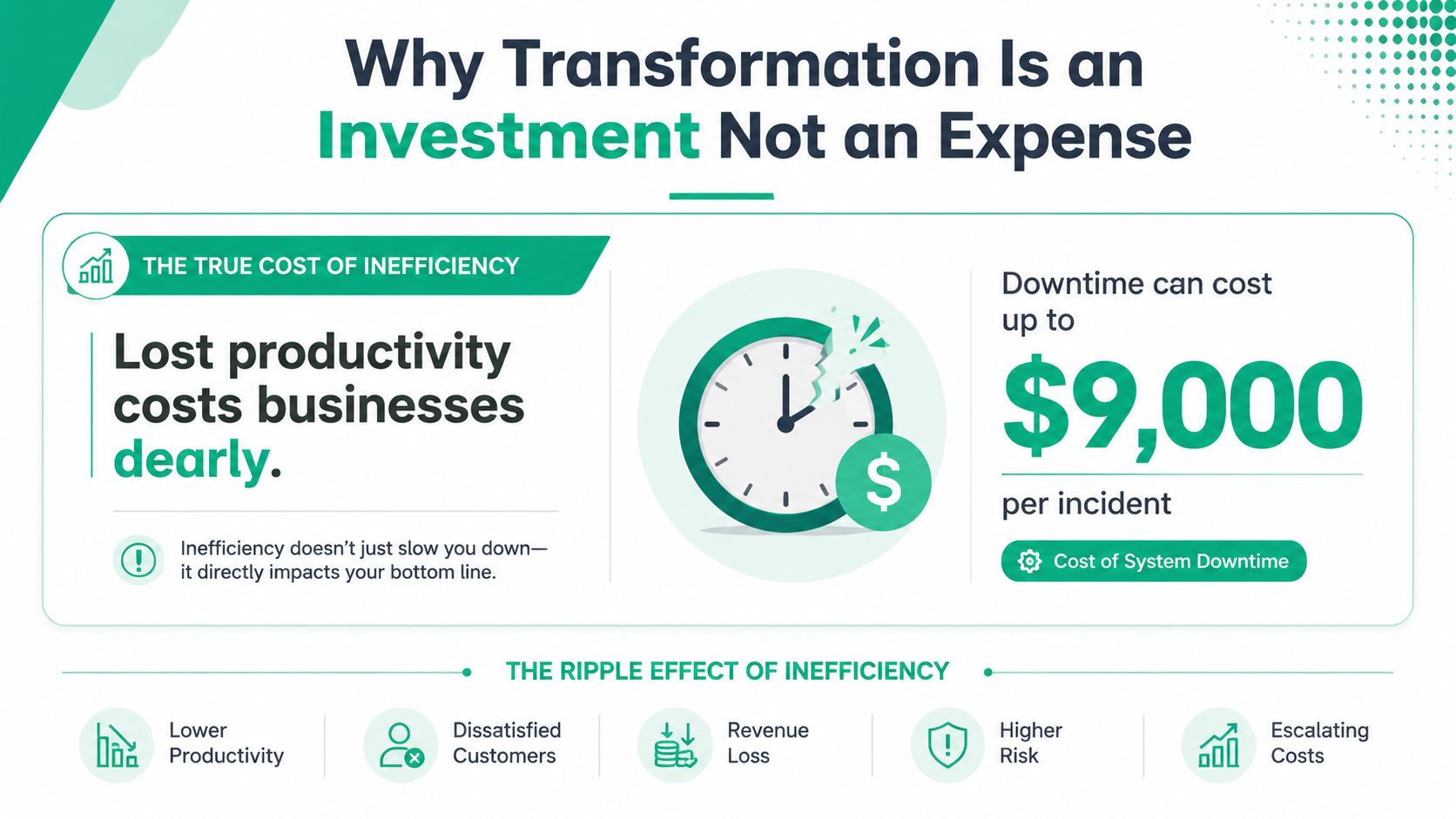
In a crisis, downtime can cost up to $9,000 per minute. Even before you hit that kind of event, every hour wasted on bad process is labor you already paid for and output you never got. That's why business continuity belongs in the ROI conversation, not off to the side.
For process automation and digital transformation, the business case is strong when it's built correctly. Digital transformation and process automation projects consistently achieve ROI between 150% and 300% over a three-year period, with most organizations seeing initial ROI within 6 to 12 months, according to BP3's digital transformation ROI analysis.
The monthly budget argument matters
Small and mid-sized companies in Central Indiana usually don't fail because one invoice was large. They get squeezed because costs are random. One month it's emergency support. Next month it's a dead switch. Then backup storage. Then after-hours labor because a server failed on Saturday.
Transformation replaces surprise spending with planned spending.
A clean model usually includes:
| Focus area | What changes financially |
|---|---|
| Stability | Fewer emergency calls and less lost staff time |
| Automation | More work completed without adding headcount pressure |
| Security | Lower exposure to ransomware, fraud, and restore costs |
| Budgeting | Predictable monthly operating cost instead of erratic repair bills |
That's how “wasted tech time” turns back into billable hours, shipped orders, and cleaner close-of-month reporting.
Fixing the process is often cheaper than continuing to absorb the interruptions.
A smart owner also looks at adjacent spend. Security testing, for example, should be judged the same way as any other operational control. This guide on optimizing penetration testing investment is useful because it frames testing as risk reduction tied to business value, not just a compliance chore.
If you're trying to get your arms around all of this, a grounded IT budget planning guide for ROI and resilience helps connect line items to continuity, recovery, and growth.
Your Step-by-Step Transformation Roadmap
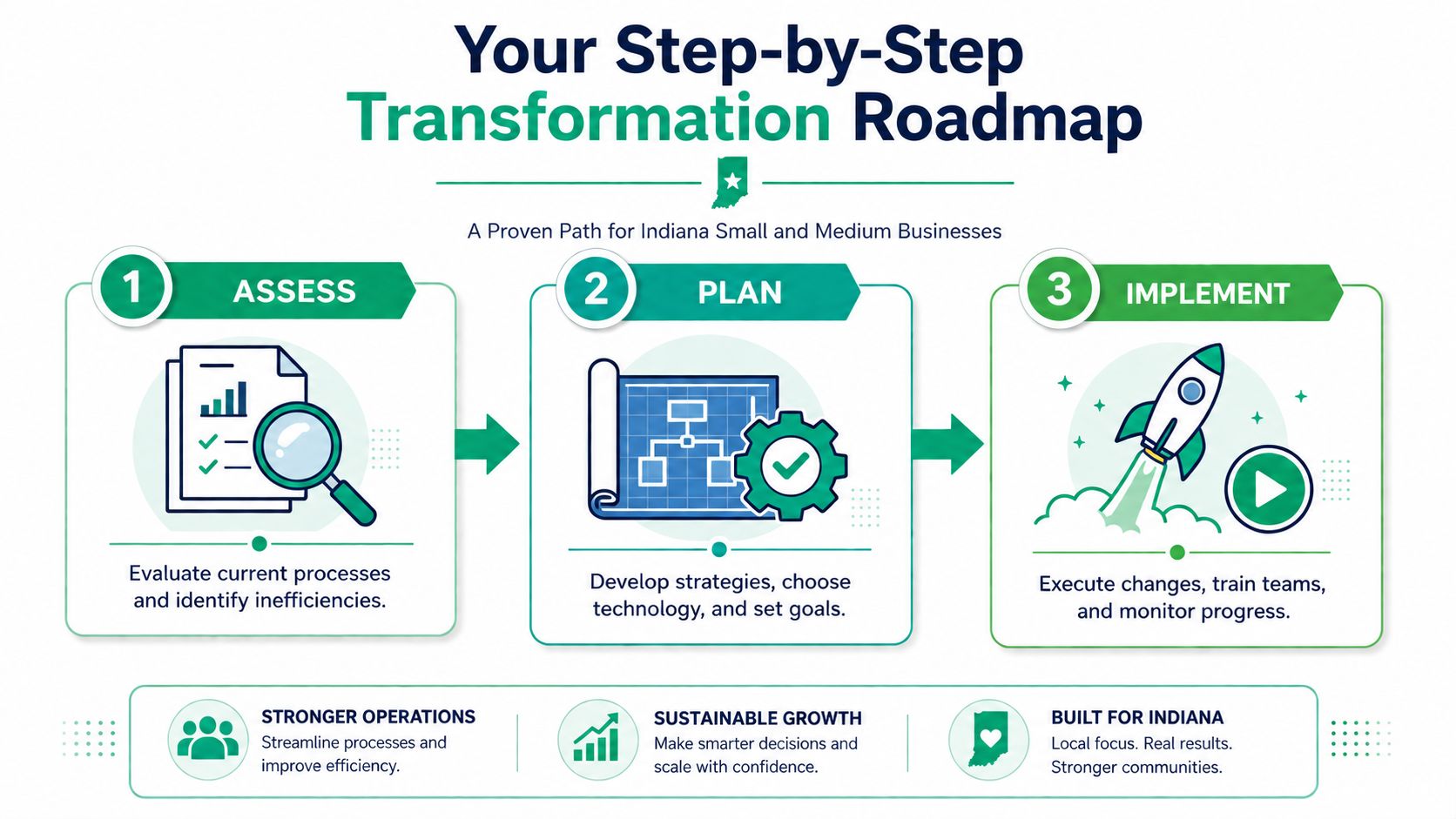
Most Indiana SMBs don't need a giant transformation office. They need a sane sequence. Start small, pick the right bottleneck, and prove the win.
Assess what's actually happening
Take a Johnson County company that still handles approvals with paper forms, emailed PDFs, and a shared spreadsheet. Nobody designed that system. It just accumulated over time.
Start by mapping the process in plain English:
- Where does work begin
- Who touches it next
- Where does it wait
- What gets re-entered
- What breaks when one person is out
This sounds basic because it is. It also works. A validated framework for business process transformation includes defining goals, assessing current processes via mapping, establishing baseline metrics, engaging stakeholders, designing the new workflow, testing via pilots, and implementing in stages while monitoring KPIs, as outlined in Pipefy's business process transformation framework.
Write down baseline measures before changing anything. That could be invoice turnaround time, error frequency, response time, backlog volume, or restore time after a system issue.
Plan around outcomes, not tools
Don't start with, “We need a new platform.” Start with, “We need approvals to stop stalling for two days.”
That planning step should answer a few blunt questions:
- What business problem are we fixing
- What's the first process worth changing
- Which staff members need to help shape it
- What can't go down during implementation
- How will we know the change worked
For SMBs, the first good project is often narrow. Digitize invoicing. Standardize intake. Replace a paper service ticket loop. Clean up file access before a cloud migration. Those projects create momentum without wrecking the week.
A lot of engineering-minded leaders like seeing examples before they commit. This roundup of BPA insights for engineering leaders is a helpful way to compare what good automation looks like in real operating environments.
Implement in stages so the business keeps moving
Many teams overreach. They try to change accounting workflow, customer communications, storage, endpoint policy, and line-of-business software all at once. Then everyone hates the project.
A better pattern looks like this:
- Pilot one process: Try the new workflow with one team or one department.
- Train on actual tasks: Show staff how the new process handles their daily work, not a generic demo.
- Watch adoption closely: If people keep creating side processes, the design probably missed something.
- Tighten after launch: Fix permissions, clean up forms, simplify steps, and remove duplicate data entry.
If cloud infrastructure is part of the move, this Indiana cloud migration playbook is the right kind of guide because it treats migration as an operational project, not just a server move.
Choosing the Right Tech for Your Indy Business
Technology should support the process, not dictate it. That sounds obvious. It gets ignored all the time.
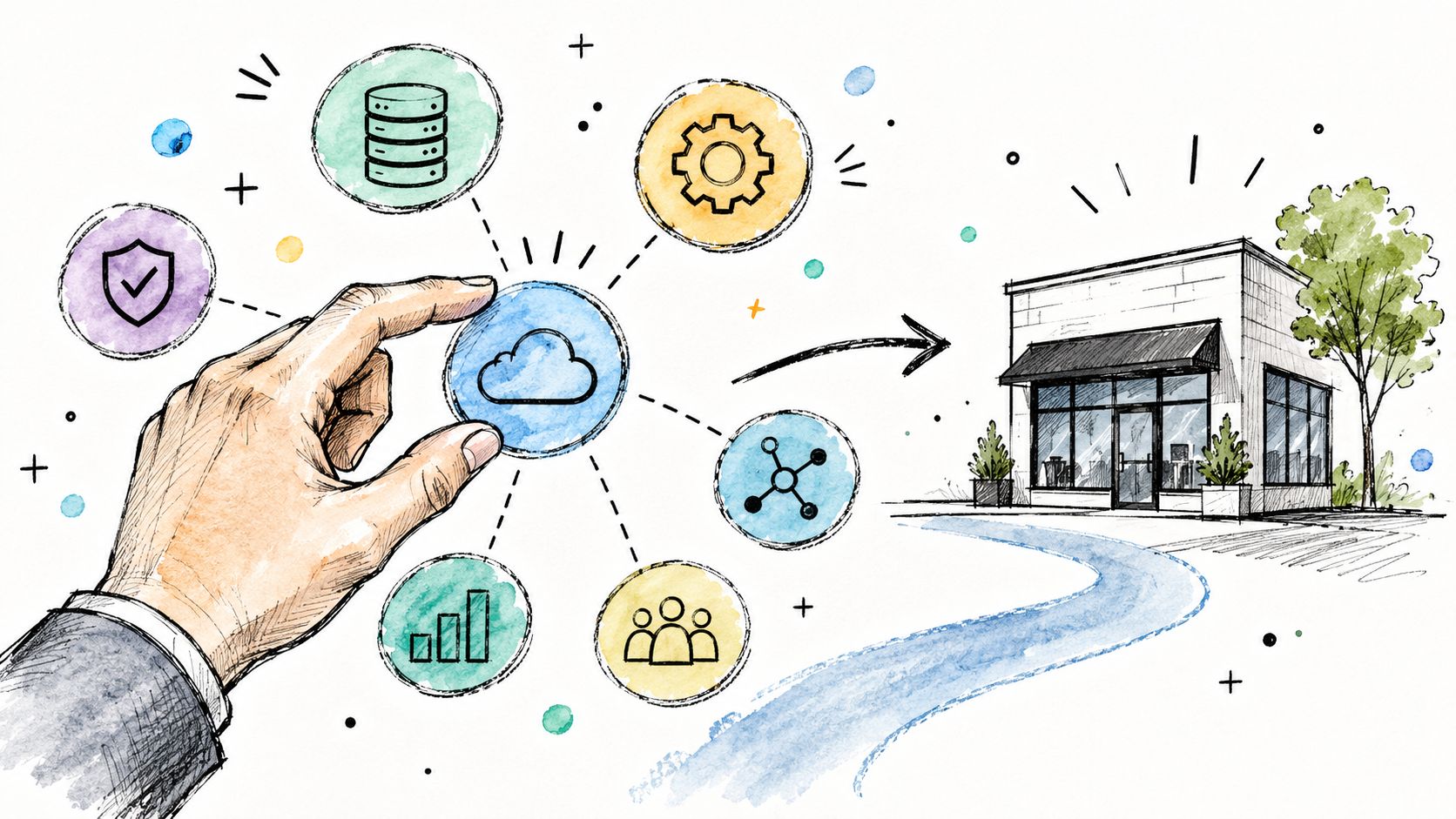
For most SMBs in Greenwood, downtown Indy, and the wider Central Indiana market, the transformation stack comes down to three pillars: networking, cloud, and cybersecurity. The exact mix changes by industry, but the logic doesn't.
Networking that stops workflow from stalling
Old buildings around the Southside are notorious for ugly Wi-Fi behavior. Brick, metal shelving, awkward layouts, and years of add-on gear produce dead spots and roaming issues that wreck scanners, VoIP calls, and cloud apps.
That's where properly designed UniFi networking can make a real difference, especially with clean switching, segmented VLAN strategy, and latency-optimized mesh nodes in the right spots. Good wireless design isn't just “better internet.” It's fewer dropped scans, fewer support tickets, and fewer staff workarounds.
For manufacturers, this matters immediately. In mid-sized discrete manufacturing facilities, hourly downtime per machine can range from €100 to €500, which is why even a “small” network interruption can become a real business case for upgrades, as noted in Symestic's MES ROI business case analysis.
Cloud that removes fragile single points of failure
That old server humming in the closet isn't just old hardware. It's a concentration of risk. If file storage, line-of-business apps, user auth, and backups all depend on one aging box, the business is one bad day away from chaos.
A better design usually shifts critical workloads into a secure cloud environment with redundancy, tighter access control, and cleaner recovery options. For some firms, that means full cloud. For others, it means hybrid. The right answer depends on latency sensitivity, software compatibility, compliance needs, and how fast you need to restore.
When we dissembled a similar client's failing RAID array, the lesson wasn't “buy newer drives.” It was “stop tying core operations to a single aging failure point.”
This is also where custom integration matters. Some companies need off-the-shelf software. Others need a bridge between legacy apps, a warehouse workflow, or a client portal. Knowing when to build and when to buy is half the job. This Indiana guide to custom software vs off-the-shelf is useful because it frames the choice around process fit, maintenance burden, and long-term operating cost.
Security that supports continuity
Security belongs inside business process transformation because a compromised system is a broken process.
For healthcare, that means controls that support HIPAA. For defense-related firms, it means an environment that can stand up to CMMC scrutiny. For everyone else, NIST CSF is still a practical backbone for identifying, protecting, detecting, responding, and recovering.
A serious baseline today often includes:
- Endpoint protection: Products like Bitdefender GravityZone to control malware and suspicious behavior on endpoints.
- Identity controls: Zero Trust architecture so access depends on verified identity, device posture, and least privilege.
- Monitoring: SOC-as-a-Service monitoring to catch bad behavior before it turns into a business shutdown.
- Recovery: Immutable off-site backups and tested restores.
- Data recovery capability: When hardware does fail, advanced options like bit-level data recovery can sometimes salvage what ordinary repair work can't.
That stack isn't fancy for the sake of it. It's what keeps Hamilton County growth plans, downtown Indy office expansions, and Johnson County operations from getting kneecapped by one preventable failure.
Getting Your Team On Board with Change
The fastest way to waste a technology investment is to roll out a shiny new system that your team avoids using.
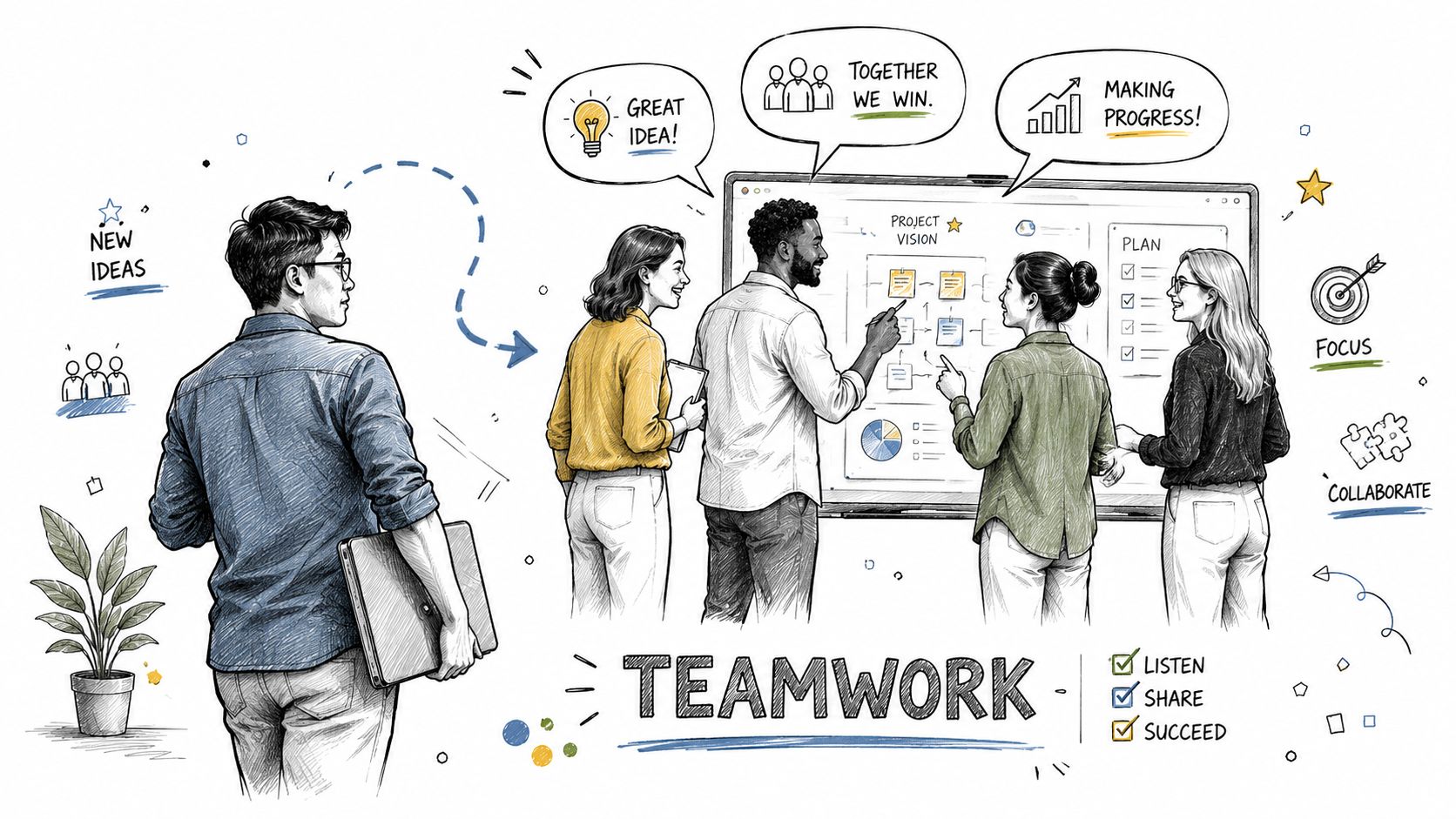
That's why the “tech-first” approach usually disappoints. The 70% failure rate of transformation initiatives is primarily caused by employee resistance and inadequate change management, not technology flaws. Successful projects require a culture-first strategy where leadership prioritizes behavioral alignment.
Why smart tools still fail
People don't resist change because they're difficult. They resist change when the new method feels slower, riskier, or forced on them by people who don't understand the job.
The skeptical employee in dispatch, accounting, scheduling, or production often knows exactly where your rollout will break. Ignore that person and they become a blocker. Bring them in early and they often become your best tester.
A practical readiness check helps. This practical guide to change readiness is worth reading because it focuses on whether people, managers, and workflows are prepared for the shift before the launch date shows up.
What works in a small business
You don't need a big consulting deck. You need clarity.
Try this approach:
- Explain the nuisance being removed: “You won't have to enter the same order twice.”
- Show the daily win: “The service history will be visible without calling the front desk.”
- Train on live scenarios: Use actual forms, actual devices, and actual exceptions your staff deal with.
- Keep one owner accountable: Somebody has to decide when the old process is dead.
The team will forgive a learning curve. They won't forgive a rollout that adds work and then pretends it didn't.
A warehouse lead may care more about scanner reliability than digital strategy. A practice manager may care more about fewer charting delays and cleaner HIPAA handling. A sales admin may care that customer records stop duplicating. Good change management respects that reality.
Here's a useful explainer on the human side of rollout and adoption for Indiana firms dealing with system changes: what change management in IT means for business ROI.
A short visual can help frame the leadership side of this work:
The companies that handle change well usually do one simple thing better than everyone else. They tell the truth about what's changing, who it affects, and what support people will get during the switch.
Measuring Real Success for Long-Term Growth
A lot of businesses stop measuring too early. If the project launched and the cost report looks decent, they call it done.
That's how weak processes survive inside “successful” projects.
Cost matters, but resilience matters too
Old-school scorekeeping asks whether a process got cheaper or faster. Those are valid measures. They're just incomplete.
68% of successful transformations now track process agility and error recovery time as primary indicators, and firms incorporating these resilience metrics see a 2.5x faster recovery from market disruptions. That matters for Central Indiana businesses that need to absorb vendor delays, staffing gaps, seasonal spikes, compliance changes, or a sudden jump in demand.
If Hamilton County growth pushes more work into your pipeline, the right question isn't only “Can we process this cheaper?” It's also “Can we absorb this without breaking?”
A better scorecard for SMBs
A useful measurement model combines operational and human signals:
| KPI area | What to watch |
|---|---|
| Efficiency | Cycle time, backlog, error volume, cost per transaction |
| Resilience | Error recovery time, restore time, ability to keep operating during disruption |
| Adoption | Whether staff use the new workflow consistently or create side routes |
| Risk | Access issues, backup gaps, compliance misses, repeated support tickets |
That mix gives you something closer to a process health score. Not a fancy dashboard for its own sake. A practical way to see if the process is stable, usable, secure, and worth expanding.
What long-term growth really looks like
Real business process transformation doesn't end when software goes live. It keeps paying off when the business changes and the process still holds up.
That could mean:
- Adding a location without rebuilding your workflow from scratch
- Hiring faster because permissions, onboarding, and documentation are already organized
- Passing audits more cleanly because systems and processes match
- Recovering from disruption faster because backups, security, and workflow design were planned together
Good transformation doesn't just improve a task. It improves how the business handles stress.
If your team is tired of slow systems, recurring downtime, and processes that depend on tribal knowledge, start with the bottleneck that hurts the most. For Greenwood and Indianapolis area companies, Finchum Fixes IT offers a Free Network Assessment and Security Risk Audit built for local businesses that need better uptime, tighter security, and a clearer path from tech spend to real ROI.